Soccer Football Ball Hexagons: Graphics & Icons
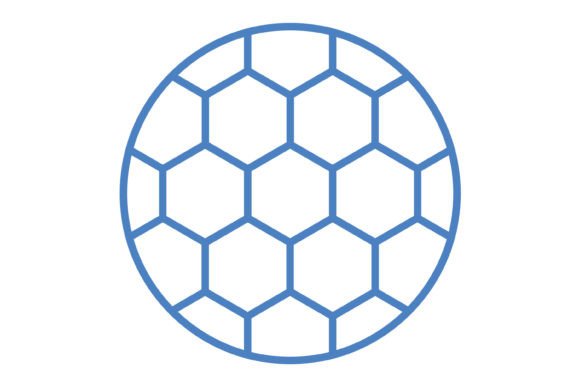
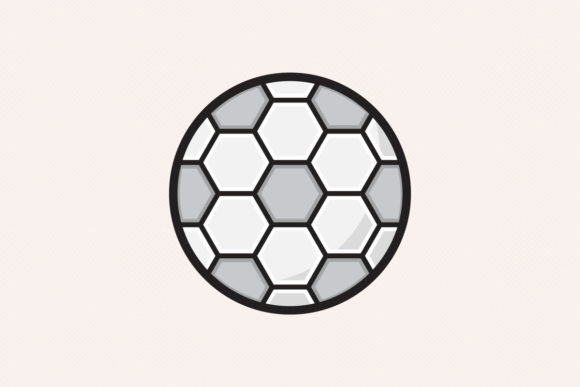
When I first opened the Soccer - Football Ball Hexagons file, I immediately saw it as a practical, cleanly constructed vector that speaks a universal sports language. The mood is energetic but not childish—think modern athletic branding rather than a cartoon kickabout. The asset is a single, iconic hexagon-based soccer ball, stripped down to its essential geometric panels. That simplicity is exactly what makes it flexible. It appeals to a broad buyer audience: Etsy shoppers hunting for teen room printables, print-on-demand sellers building quick sport-themed merchandise, Cricut crafters wanting a crisp cut file, and even small business owners who need a cohesive graphic for a local soccer club’s social media graphics.
The vector personality is bold, structured, and slightly technical. Because the ball is built from distinct hexagons, it carries a subtle geometric precision that feels more premium than a standard rounded clipart. You can lean into that modern, minimal look or pair it with playful fonts to shift the tone. For a digital product creator like me, this means one asset can serve multiple niches without looking out of place—from a sleek monochrome t-shirt design to a colorful Canva template for a kids’ soccer camp.
First Look: Why This Hexagon Ball Catches the Eye
The design is an iconic vector soccer ball formed by interlocking hexagons, delivered with clean lines and even spacing. It’s not a photorealistic render; it’s a crisp graphic design asset that feels deliberately stylized. The description says it’s ready to use in websites, apps, shops, videos, games, sport equipment visuals, and marketing, and I can confirm that versatility. The hexagon structure gives it a unique edge over typical round ball icons—it’s easier to integrate into layouts with a technical or structured visual hierarchy. The single-icon format means you’re not overwhelmed by a bloated bundle, but you get a well-crafted piece that you can adapt freely.
Testing the Asset in a Real Etsy Product Line
To ground this review, I imagined a scenario: I’m preparing a soccer-themed digital download collection for my Etsy shop, timed for a back-to-school sports season. The collection would include printable wall art, iron-on transfers, and matching social media templates. I needed a central graphic element that could tie the products together visually. The Soccer - Football Ball Hexagons became the anchor. Here’s how I tested it before committing to a full product launch.
Simulating Product Formats to Gauge Versatility
I exported the vector into the formats I’d actually sell. As a PNG design with a transparent background, it sat perfectly on mockup t-shirts, mugs, and tote bags without any white halo. For sublimation designs, I tested it on a tumbler wrap template—the hexagon edges remained crisp even when scaled up. The SVG design version imported cleanly into Cricut Design Space, with no broken nodes or unnecessary open paths. That’s critical for crafters who need a reliable cut file for heat transfer vinyl. I also dragged it into a Canva template as a clipart accent, and it integrated smoothly with the platform’s interface. It didn’t fight the layout, which is a small but telling detail for anyone building Canva templates to sell.
Checking the Mood Across Different Product Types
I laid out the ball on a nursery print, a bold t-shirt design, a minimalist planner sticker, and a sports team invitation template. On the nursery print, the hexagon pattern felt playful when paired with a soft sans serif font and pastel colors. On the t-shirt, a larger scale and a monochrome palette gave it a rugged, athletic look. For the planner sticker, I reduced the size to a small icon, and the geometry remained recognizable. In the invitation template, it worked as a subtle background element behind text. The asset didn’t dictate the style; it adapted to the surrounding design. That’s a hallmark of a well-drawn illustration.
Turning One Icon Into Multiple Sellable Formats
With a single, well-made graphic design asset like this, you’re not limited to one product. I mapped out a product tree: the base file could become a printable design as a 5x7 wall art print, a set of digital stickers, a sublimation design for a phone case, a commercial design element for a logo template, and a clipart inclusion in a larger design bundle. For a creative marketplace like Creative Fabrica, this ball could anchor a “sports party” bundle or a “boy’s birthday” SVG collection. The hexagon pattern also makes it a natural fit for packaging design—think of a small sports equipment brand needing a crisp icon for hang tags. Because the file is vector, scaling it for a product mockup on a billboard or a small sticker design is effortless.
Where the Vector Shines in Product Presentation
In a crowded Etsy product grid, thumbnail appeal is everything. I tested the Soccer - Football Ball Hexagons as a main listing image element. Placed on a clean white background with a subtle shadow, the hexagon pattern gave the listing a structured, high-contrast look that stood out. For a print-on-demand mockup, I used it on a black t-shirt preview—the bold lines popped without losing detail. When I built a seasonal bundle thumbnail, the ball acted as a focal point that communicated the sports theme instantly. This kind of visual storytelling can raise perceived value and click-through potential, especially when the graphic has a distinctive shape like these hexagons.
Brand consistency also benefits from a single asset used across multiple products. A small business can place this ball on shop banners, social media graphics, product labels, and thank-you cards. The repeated geometric motif creates a subtle brand identity without needing a full design team. For handmade business owners who sell physical sports gear, the vector can be used on product mockups to unify an online storefront.
Watchpoints for Cricut, Sublimation, and Print
No asset is a one-size-fits-all miracle. I found some areas where the Soccer - Football Ball Hexagons needs careful handling. For tiny sticker designs—say, under 1 inch—the hexagon lines started to merge visually, losing the distinct panel pattern. This is expected with any detailed clipart, but if you’re designing very small kiss-cut stickers, simplify the design or use a bolder version. For Cricut projects, the intricate cuts between hexagons can be problematic if the blade isn’t sharp or the material is too thick. I’d recommend doing a test cut on scrap vinyl before a full run. For sublimation, the vector’s thin lines printed sharply on a mug, but on a low-resolution printer, the edges might become soft; always verify at 300 DPI.
Another point: the asset works beautifully on light backgrounds, but on dark backgrounds, the contrast can drop if the ball is mostly black or dark blue. You may need to adjust the stroke color or add a light outline. In text-heavy templates, placing the ball directly behind copy can make the message hard to read because of the hexagon pattern’s busyness. Use it as a framed accent or a watermark instead. Also, for print-on-demand products that require precise cutting lines, such as a shaped sticker with a thin border, the hexagonal perimeter isn’t a smooth circle—it’s a polygon. That’s fine for a square sticker, but if you need a perfectly round badge, you’ll have to add a circular background.
Seller’s Checklist Before You List
After testing, I always run through a practical checklist. First, verify the commercial license. The product description implies the asset is ready for commercial projects, but I check the included license file to confirm I can use it in digital downloads for resale. No creator wants a takedown notice. Second, inspect the file organization. A single icon is straightforward, but I still check that the SVG is clean, the PNG is at least 3000x3000 pixels, and any EPS or AI files are editable. Third, test on multiple mockups: a white background, a dark background, a kraft paper mockup, and a product preview. The ball should look consistent across all. Fourth, try pairing it with different font styles—a serif font for a classic sports club feel, a script font for a personalized gift, a sans serif for modern gear, a handwritten font for a playful sticker, and a display font for a bold headline. The hexagon structure holds its own next to each, which is rare.
Finally, I compress the PNG for web previews but keep the original high-res version for customers. When I package the files, I name them clearly, like “Soccer-Hexagons-Ball-SVG.svg” and “Soccer-Hexagons-Ball-Print.png”. This small step reduces customer confusion and returns.
Final Verdict on the Soccer Hexagons for Commercial Use
For a digital product creator building a sports-themed collection, the Soccer - Football Ball Hexagons is a dependable graphic design asset. It won’t replace a full icon set, but it delivers exactly what it promises: an iconic vector ball that’s ready to plug into multiple projects. The hexagon pattern gives it a modern twist that can elevate a simple t-shirt design, a printable wall art piece, or a Canva template. I’ve used similar assets in my own Etsy shop, and those with clean geometry tend to perform better in search because they photograph well in product mockups and look more professional.
If you’re on the fence, start with a small product test: create one printable, one SVG, and one social media graphic using this ball. Check how they rank in your creative marketplace and note customer feedback. I suspect you’ll find it’s a workhorse that quietly adds structure to your design assets. Just remember to respect the commercial license, test your cuts, and keep the scale appropriate for the product. The result is a cohesive, thoughtful product line that feels less like a generic clipart dump and more like a curated small business branding suite.